
In previous blogs we have discussed a number of challenges facing RSOs: Social stigma, nefarious laws, even rejection by churches. We allow for the fact that a number of RSOs are not Christians. However, the author and this ministry are Christian, so this blog is tailored to born-again citizens on the registry as well as to those who are contemplating becoming a part of the faith.
First, a quick primer on salvation. No one gets saved just because one day he or she decides to. The preaching of the Word of God awakens saving faith, and the invitation to be saved originates with God in heaven (Romans 10:14-17; John 6:44). The Holy Spirit convicts a person of sin and if he or she, upon this conviction, decides to be saved, then Jesus Christ will save them (John 16:8-11, 6:37). This is how salvation happens.
For the Christian who is on the sex offender registry, there are challenges awaiting you. While in prison you could freely attend church services and even serve in ministry. Out here it is a different world and not just because you are no longer behind the razor wire. For one thing, there are states that have laws which make it difficult or impossible for RSOs to serve in churches. In my home state of Georgia, for example, those convicted of a sexual offense on or after July 1, 2008, cannot work or volunteer at a church (O.C.G.A. § 42-1-15). [1] Many RSOs in Georgia are affected by this restriction.
Also, there is the liability factor. Yes, the liability factor as in insurance. This author has researched the subject of convicted felons attending church. Regardless of which crime category was looked into, the hits on the internet were consistently about sex offenders in church. There is a very real and hard bias against RSOs in churches as witness this list of prominent church insurers and some of their recommendations:
| IMPORTANT CHURCH INSURACE PROVIDERS [2, 3, 4] | |
| COMPANY | NOTES |
| GuideOne | Best overall for church coverage. |
| Brotherhood Mutual | Best for mission trips. |
| Thimble | Best for special event insurance. |
| Church Mutual | Best for religious camps. |
| Great American Insurance Group | Best for larger, active churches. |
| AGFinancial | Specializes in protecting churches, schools, ministries, and other nonprofit organizations as well as businesses. |
| Insurance Board | Specializes in serving churches and related entities in six different denominations. |
- GuideOne: From budgets to outreach, there is no shortage of decisions on church leaders’ minds. More and more, one of these decisions is whether or not to allow sex offenders in their congregations when an offender has been worshipping with them or would like to…more than 60 percent of the 800,000-plus registered sex offenders in the United States are currently under some form of community supervision, which often includes faith-based guidance. The fine line that decision-makers like you walk makes the situation especially tricky…your number-one priority is protecting your congregation—especially children and abuse survivors. A formal sex-offender policy developed by church leaders and legal counsel is the best—and easiest—way to navigate this situation…treating the offender like any other member and granting him or her access to all church areas and activities poses a major liability risk. Excluding offenders entirely is a decision that should be made with legal counsel as you are effectively banning individuals from the premises. A more moderate approach is limited participation and supervised attendance—just be sure you have a team in place to oversee chaperoned attendance…A signed conditional attendance agreement is one step toward allowing offenders to participate in church activities while holding them accountable for their actions…If a convicted sex offender is attending your church—or wants to—schedule an in-person meeting with the offender and at least two church leaders…During the meeting, you’ll…want to: Gain written approval for a background check and release of probation/parole information; review who you’ll disclose information to within your church; and have the offender sign the limited attendance agreement. [5]
- Brotherhood Mutual: …Churches can play a substantial role in helping offenders return to society, rebuild relationships, overcome old behaviors, and deepen their faith commitment. Do you allow the person to stay unconditionally, and pray that nothing happens? The offender may harm someone in the church, traumatizing the victim and devastating your ministry. Do you ask the person to leave? Ministry leaders are generally free to prohibit sex offenders (or any individuals) from attending, especially if the ministry does not have the resources to appropriately monitor a sex offender’s activities while they are at church. Of course, this may raise tough questions about the church’s position on forgiveness. Do you offer support if the person is repentant? You’ll need to meet the offender’s needs, overcome members’ objections, and protect vulnerable people in your flock…While a sex offender may request permission to attend church, it may also be that an offender’s background is discovered after years of attendance. Your church should act now to: Decide whether to allow repentant sex offenders to participate in your ministry; develop a policy outlining the extent of participation allowed; and adopt strategies to manage the situation. You should understand the differences in types of sex offenders; research local laws regarding sex offenders; and consult legal counsel before working with sex offenders. Create a set of procedures that offer accountability for the sex offender and protection for all members, especially children and people with disabilities. Having these procedures in place will restrict offenders’ participation in church life (those who recognize the effect of their crimes should accept the limitations) and help minimize church members’ fear when they learn that a sex offender is involved with the church. You should make a covenant with the offender; assign an accountability partner; consider ongoing counseling; communicate with church members; restrict contact with children; don’t do it alone but seek help in assessing the risk that a sex offender will re-offend; and assess each situation individually. [6]
- AGFinancial: …let it be understood that a church has not been held liable for unknowingly allowing a registered sex offender to attend services. This information relates to known registered sex offenders only. When it becomes known to the pastoral staff that a registered sex offender is attending, the church can choose one of the following three responses: 1. Do nothing. Unfortunately, this is often the approach taken by many churches. This response is not recommended due to its associated legal risks…Bottom line: in choosing to do nothing, you carry a high risk of harm to minors and of being sued for negligence; 2. Total exclusion of all registered sex offenders from the church. Although it may appear harsh and unforgiving, this is a valid option that depends on the severity of the person’s crimes…If you have a person who’s a Tier 3 offender, the best response is to exclude them from attending. Even if the crime(s) occurred decades ago, consider the age of the victim(s); if the incident(s) involved pre-pubescent or early-pubescent children, it should not matter how long ago it occurred, since such a person may be a pedophile (someone with a sexual preference for prepubescent or early pubescent minors). According to an FBI profile, pedophiles are incurable, promiscuous, predatory, and have a high recidivism rate…In addition, exclusion may be the proper response in cases where the victim(s) of the sex offender’s crimes attend the same church; or 3. Conditional attendance, according to a signed legal agreement. This means that the person is allowed to attend provided he or she complies with the conditions of the agreement…Worded properly, this can put the church in a position to be viewed as having acted reasonably under the circumstances, which means that it may not be considered negligent. However, a couple of things must be kept in mind if this course is chosen. First, this document must be drafted by an attorney and comply with any requirements under state law. Second, careful thought must be given as to the conditions stated in the policy. One of those is that a chaperone must be designated to observe the person at all times while on church premises…It is also recommended that churches adopt a Zero Tolerance Policy for violation of a conditional attendance agreement. Even a single violation should result in the individual no longer being permitted to attend. In addition, it is best to contact your insurance agent or company to review the agreement after it is drafted and reviewed by an attorney. This is for your own protection…One more step should be taken before adopting an attendance agreement. Check with the individual’s probation officer if they have one. Many registered sex offenders have been released from incarceration as a result of a probation or parole agreement. Some probationary agreements prohibit offenders from attending church, and if this is the case, it is essential for church leaders to know it. [7]
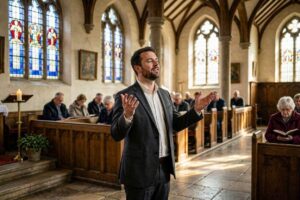
Nowhere on any of the above websites did this author find any information pertaining to other types of offenders, just sex offenders. Add to that the bias that even many self-proclaimed Christians have against RSOs and the picture can become bleak and dismal very quickly. How many RSOs get out of prison where the church was a place of hope and acceptance, only to run into this brick wall of bias and shame when they try to join a church out here? Yes, church leaders have a responsibility to protect their congregations, but any solution that wounds any of the sheep is not a solution! Any church with that attitude has no right whatsoever to claim they are a church, and then on top of that lie to all the passersby with their marquees that say, “All Are Welcome.” All are not welcome, and that’s the truth.
Even so, it is unrealistic to expect that things are going to change with the institutional Church. At the same time, it is an inescapable Scriptural fact that Christians should fellowship with one another and worship corporately as well as individually (Acts 2:42; Hebrews 10:24-25). If you are an RSO, what can you do? First, remember: You are accepted in the Beloved and more than a conqueror through Christ Jesus no matter what the world (and the institutional Church) say about you (Ephesians 1:3-14; Romans 8:31-39). Second, you will have to take your chances in looking for a church to attend. Be prepared for rejection or for perpetual restrictions. If you are okay with such restrictions then that is your choice, but truthfully, any church which endorses such a policy is denying the power of God. Third, there are churches which will accept you without all the restrictions. The disciple of Jesus Christ who happens to be an RSO will take his or her chances and do what is necessary to find a genuinely loving and accepting, Scripturally based church.
Sometime in the past, all an RSO had to do was confide to the pastor his or her past and that was sufficient for accountability and acceptance. Nowadays, not only is that not good enough, but those who are not willing to go along with all the restrictions are viewed as unrepentant. Remember, they are the ones who changed the rules! They moved the goalposts, not the RSOs wanting to join a church.
There is another alternative also for the disciple of Jesus Christ/RSO: Online church. Now, going to church online is no substitute for in-person church attendance. But some RSOs on probation or parole may be prohibited from going to church while under such conditions, so online services are a viable alternative. This does not preclude the individual under such restrictions networking with other believers and meeting informally outside of the church building. Disciples should do this anyway because of the necessity and the Biblical mandate for fellowship.
Just because certain restrictions have befallen RSOs does not mean that God stopped calling people—including RSOs—to ministry. What do you do if you are such a person, who knows God called you yet because of your sex offender status you are forbidden by law to work or volunteer at a church? There are many more places to serve God than in an institutional church setting. There are home churches, Bible studies, et cetera that are still available. There are also places you can serve others such as homeless shelters, for example, that in some cases might be overseen by a ministry yet technically are not classified as ministries themselves. If you decide you are going to take your chances helping at a church but are legally restricted from doing so, be prepared to face the consequences. Even if the church leadership looks the other way, which they probably will not, the law won’t look the other way. In truth, institutional churches might be good places to meet and have fellowship with other believers, but they are not good to minister from, not for RSOs. You have to be able to think outside the box.
Despite the failings of the institutional Church in dealing with RSOs, the believer in such a case is not without hope. All is not lost. Staying prayed up and read up in the Word of God will go a long way in helping you in your quest for Christian church attendance and fellowship. Online church services are also useful. Although there are those who will ostracize you, there are other believers who will accept you and come alongside you in your journey with Jesus Christ. And reach out to us at It Ain’t Over Ministries. We’re RSOs also, and He has shown us that It Ain’t Over!.
REFERENCES
All Scripture references are from The Holy Bible, New King James Version, Copyright © 1982 by Thomas Nelson.
[1] https://gbi.georgia.gov “Georgia Bureau of Investigation: 42-1-15 State Sexual Offender Registry.” Retrieved 02/15/2025.
[2] https://fitsmallbusiness.com June 26, 2023, article by Nathan Weller, “Church Insurance: Top Companies, Cost & Coverage.” Retrieved 02/15/2025.
[3] https://www.agfinancial.org AGFinancial: “Property & Casualty Insurance.” Retrieved 02/15/2025.
[4] https://www.insuranceboard.org Insurance Board: “Who We Serve.” Retrieved 02/15/2025; slight editing.
[5] https://www.guideone.com “The Do’s and Don’ts of Dealing with Sex Offenders at Church.” Retrieved 05/28/2024; edited for brevity.
[6] https://www.brotherhoodmutual.com “Sex Offenders: Should They Be Allowed to Attend Church?” Retrieved 05/28/2024; edited for brevity.
[7] https://www.agfinancial.org “Church Liability and Registered Sex Offenders.” Retrieved 05/28/2024; edited for brevity.